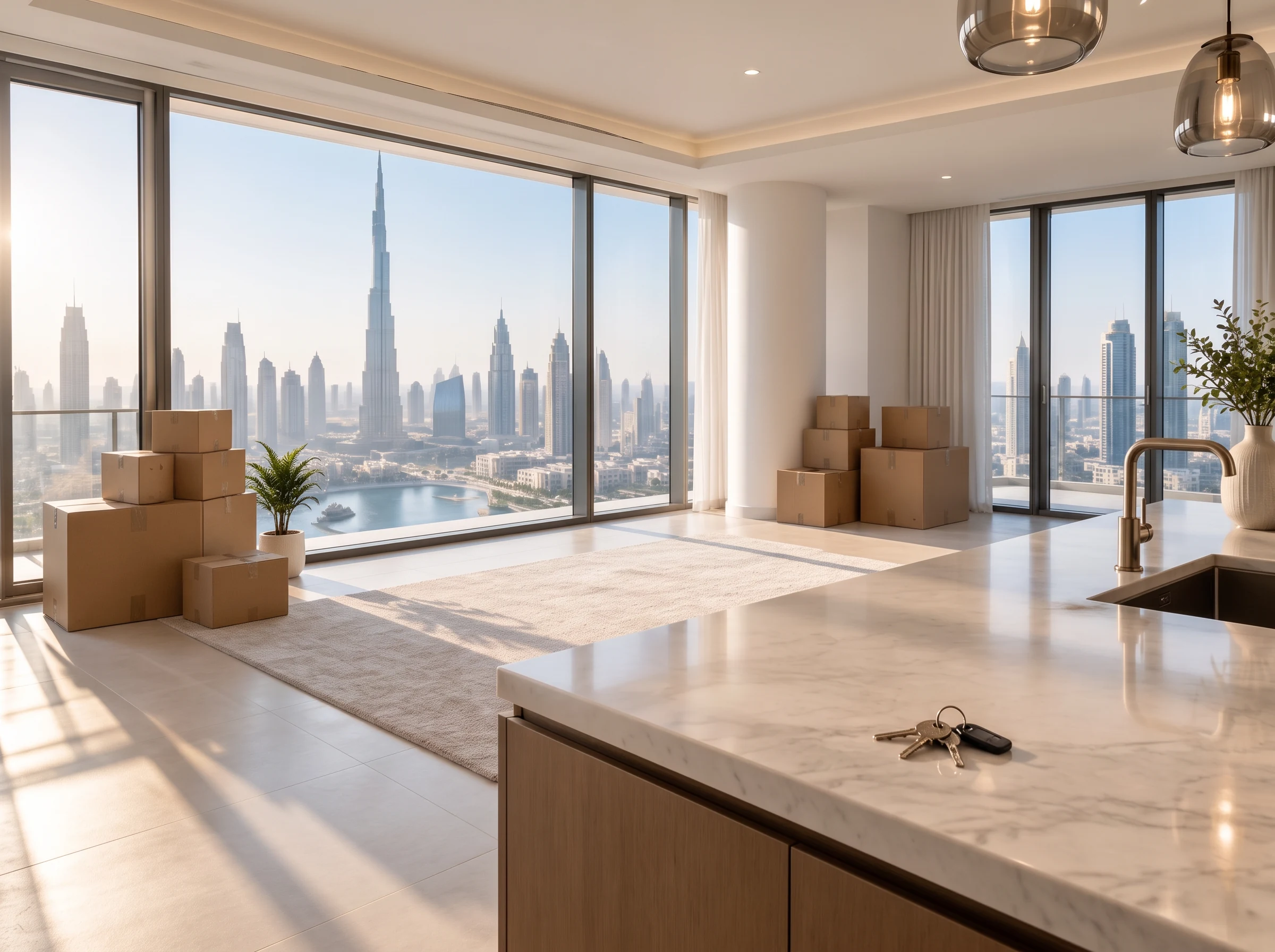
What It Really Takes to Relocate to Dubai in 2026
Moving to Dubai is less about the flight and more about the order in which you do things: visa, Emirates ID, bank, home, utilities, schools and car. This guide sets out that order, the documents you need and a realistic timeline for the first 90 days.
Last updated: September 2026
Why the order matters
Almost everything in the UAE depends on something else. A tenancy contract usually needs a residence visa or at least a passport and entry stamp. Utilities need a registered tenancy contract. A bank account is far easier with an Emirates ID. School places need proof of residence. If you try to do everything at once, you end up queuing twice.
The practical approach is to work in layers: first your legal right to live here, then money, then the home, then the family. Each layer unlocks the next. The timeline below is the one we would give a friend moving here, not a promise — processing times change and depend on your visa route.
A 90-day relocation timeline
| When | What to do | Depends on |
|---|---|---|
| Before you fly | Choose visa route (employment, investor, freelance, Golden Visa); attest degree and marriage/birth certificates if needed | Your visa sponsor |
| Before you fly | Shortlist two or three areas and schools; book viewings for your first week | Your budget and commute |
| Week 1 | Entry, medical fitness test and biometrics for the residence visa | Sponsor or free zone |
| Weeks 1–3 | Residence visa stamped or issued electronically; Emirates ID processed through ICP | Medical and biometrics |
| Weeks 2–4 | Open a bank account; sign tenancy; register it with Ejari | Emirates ID or visa |
| Weeks 3–5 | DEWA connection, internet (du or e&), move-in permit from building management | Registered Ejari |
| Weeks 4–8 | School assessments and enrolment; nursery places | Proof of residence |
| Weeks 6–12 | Convert or obtain a UAE driving licence through RTA; buy or lease a car; Salik tag | Emirates ID |
Indicative only, September 2026. Your sponsor, nationality and visa type change the sequence and timings.
Step 1: your residence visa and Emirates ID
Your residence visa is the foundation. Most people are sponsored by an employer, by a free zone company they own, or by a family member already resident. Investors and certain professionals may qualify for longer-term options such as the Golden Visa, covered in a separate guide.
The process usually involves an entry permit, a medical fitness test, biometrics and then issue of the residence visa and Emirates ID through the Federal Authority for Identity, Citizenship, Customs and Port Security (ICP) or, for Dubai-sponsored visas, the GDRFA. Government fees vary by visa type and are published on the official portals; check them there rather than relying on any blog, including this one.
We do not process visas ourselves. Visa and company-formation work is handled by licensed PRO providers and typing centres; we can introduce you to one and keep track of appointments so nothing is missed.
- Passport valid for at least six months
- Passport photos to UAE specification
- Attested degree certificate, if your employer or visa type requires it
- Attested marriage and birth certificates to sponsor family members
- Tenancy contract or Ejari, later required for family sponsorship
Step 2: banking and money
UAE banks are cautious with new residents. Expect to be asked for your Emirates ID (or proof it is in process), passport, visa, a salary letter or proof of income, and sometimes a reference from your home bank. Opening can take from a few days to several weeks. Bring certified bank statements with you rather than trying to download them from abroad later.
Keep an international account open during the first months. Rent in Dubai is often paid by cheque or bank transfer in one to four instalments a year, and deposits for the home, DEWA and schools arrive in the same fortnight. Budget for that cash flow before you sign anything.
Step 3: finding and setting up your home
Choose the area before the property. Commute times at school-run hour matter more than the view. The neighbourhoods guide compares the main family areas. Use a RERA-registered broker and check the permit number on any listing; the Dubai Land Department publishes broker details.
Once you sign, the tenancy must be registered through Ejari. That registration unlocks your DEWA account for electricity and water, and it is also what schools and family visas ask for. Your building will need a move-in permit, and most towers require a booked service lift and a certificate of insurance from your movers.
- Book the move-in permit and service lift with building management before the movers arrive
- Arrange DEWA activation as soon as Ejari is registered; allow for a refundable deposit
- Order internet from du or e& early — installation slots can be one to two weeks out
- Check air-conditioning service records and ask the landlord for a pre-move-in clean
- Photograph every room before moving in, for the deposit at the end
Step 4: schools and family
Popular schools fill early, particularly in Years 1–6. Most ask for school reports, a passport copy, the child's visa or proof it is in process, and an assessment. Dubai private schools are regulated by the KHDA, which publishes inspection ratings and fee frameworks. Apply to more than one school and ask about waiting lists honestly.
If you plan to employ a nanny or housekeeper, understand that domestic workers in the UAE are employed under a specific framework, and hiring normally goes through licensed Tadbeer centres or a sponsor visa. The household help guide explains what running a home here really involves.
Step 5: driving and getting around
Some nationalities can convert their home licence directly; others must take lessons and a test through an RTA-approved driving school. Until your residence visa is issued, visitors may be able to drive a rental car on a home or international licence, depending on nationality. Register your car for Salik, Dubai's toll system, and save the RTA and Dubai Police apps for fines and parking.
Relocation checklist for your first 90 days
- Visa route confirmed and sponsor documents ready
- Medical test, biometrics and Emirates ID completed
- Bank account open; international account kept for transition
- Area chosen by commute; home secured through a RERA-registered broker
- Tenancy registered with Ejari
- DEWA, internet and move-in permit arranged
- School places confirmed; reports and assessments done
- Health insurance active for every family member
- Driving licence converted or lessons booked
- Emergency numbers saved: 999 police, 998 ambulance, 997 fire
Where SETTRA fits in
Our founder, Natig Rashidli, has lived and worked in Dubai for years, in hotels and then in private homes, and has seen how small delays compound: a missing attestation holds the visa, which holds the Ejari, which holds the electricity. Our role is to keep that chain moving. We plan the sequence, book the viewings, coordinate the movers and building, deal with DEWA and internet, and keep one list so you know exactly what is done.
Visa, legal and property transactions stay with licensed professionals; we coordinate them on your behalf. You can read more about how this works on the relocation support page or see the packages on the pricing page.